
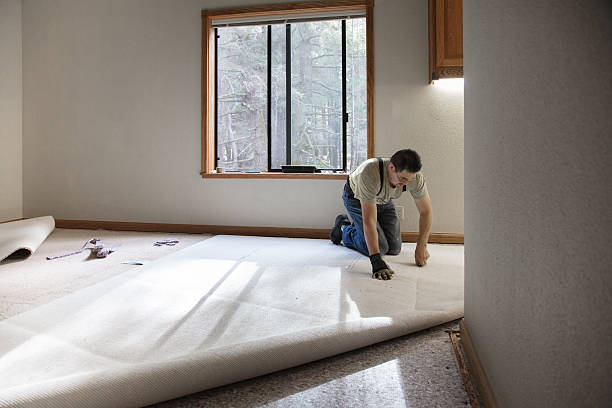
Most people don’t think about carpet until it disappoints them. When paths show up too fast. When the room feels louder than it should. When the seams start talking back. That’s when it becomes clear—carpet isn’t just something you finish a room with. It shapes how a space holds up to life. Choosing it well isn’t about taste anymore. It’s about foresight.
Table of Contents
1. The Installation Protocol: Where Precision Becomes Architecture
When carpet fails, it rarely fails quietly. It ripples. It squeaks. It pulls. And suddenly everyone’s blaming the material. The technical side which home owners may tend to ignore is likely to cost them dearly.
Most of the time, the problem started long before installation day:
- Subfloors weren’t properly checked or corrected, so seams never had a fair chance.
- Stretching methods were chosen out of habit, not matched to the carpet’s construction.
- Stairs—especially with patterned or Berber carpet—were rushed, where precision matters most.
As such, precision Carpet Installation is a foundational structural correction; it isn’t just about rolling out fabric. It’s where the subfloor is stabilized and the power stretcher ensures the pile remains taut for a decade, not just a season.
To ensure the work holds up under real-world use—and professional inspection—experienced installers apply targeted technical controls:
- Seam-Peak Control: Seams are sealed and set to remain invisible under direct and natural light.
- Fiber-Specific Tensioning: Stretching is calibrated to the carpet’s backing and pile to prevent fiber drift and early wear.
- Integrated Transition Detailing: Carpet edges are finished flush to adjoining surfaces to eliminate gapping and trip points.
When done right, you don’t notice any of this. When corners are cut, you notice everything. Longevity doesn’t come from the label—it comes from the process.
2. Performance Begins Underfoot: Comfort Isn’t Passive
Carpet works harder than most surfaces, and it does it quietly. Every step, every chair slide, every late-night pacing session—it absorbs it all.
The difference between a carpet that lasts and one that gives up early usually comes down to things no one sees:
- Padding density, not thickness, decides whether foot traffic rebounds or permanently carves lanes into the pile. Dense padding helps with “harsh winter drafts” and “basement dampness.”
- Tufting and fiber structure, especially in looped and Berber styles, determine whether hallways hold their shape or slowly unravel under pressure.
- Sound control, where the right cushion and pile height take the edge off echo and movement—something you notice immediately in upstairs bedrooms or work-from-home setups.
When these choices are right, rooms feel calmer. When they’re wrong, the carpet feels tired long before it should.An experienced and reputable carpet expert isn’t promising a “magical” product; they’re promising a reality-based selection—a grounded hallmark of professionalism, accountability, and long-term thinking.
3. Visual Calm: When Carpet Stops Competing With the Room
Carpet sets the tone before furniture ever does. It can settle a room—or quietly fight it.Good decisions here aren’t about chasing samples under showroom lights. They’re about restraint:
- Pile height and density that suit the room’s proportions instead of swallowing it or flattening it.
- Pattern scale that disguises wear without turning the floor into visual noise.
- Light behavior, because the same carpet can feel rich in one room and dull in another depending on exposure and finish.
The goal isn’t to impress visitors. It’s to live comfortably in the space day after day. When carpet aligns with architecture, everything else feels easier to place.
4. Matching Carpet to Life, Not to Aspirations
Not every home needs plush luxury. Not every office needs commercial-grade loop. The best choice depends on how people actually live.
Reality-based selection looks like this:
- Homes with kids and pets benefit from tight-loop or textured cut piles that forgive accidents and hide traffic instead of showcasing it.
- Multi-level homes feel better with dense padding that softens steps and keeps sound from traveling where it shouldn’t.
- Older homes often demand low-profile constructions that respect original scale rather than overpower it.
This isn’t about upselling comfort—it’s about avoiding regret. Carpet should age alongside the space, not fight it.
5. The Experience Is Part of the Craft
Installing carpet isn’t subtle. Rooms shut down. Furniture migrates. Fibers travel. What matters is how intentional the process feels.
A professional approach shows up in small but telling ways:
- Clean cuts and containment that keep dust and debris from spreading through the home.
- Clear sequencing—what’s happening today, what’s next—so people aren’t left guessing.
- Furniture reset with attention to seams, nap direction, and transitions under real lighting.
When people feel respected during installation, they trust what’s being built. That trust doesn’t come from promises—it comes from behavior.
6. Long-Term Thinking: When Carpet Earns Its Place
Cheap carpet doesn’t just wear out—it erodes confidence. It makes people feel like they chose wrong.
Well-chosen, well-installed carpet does the opposite:
- Traffic patterns take longer to show.
- Stains clean up without panic.
- Padding keeps its resilience instead of collapsing into memory foam paths.
When economic and psychological pivot rule over cost, over time, the math changes; fewer replacements, less frustration, and a space that continues to feel maintained instead of managed. That’s when carpet stops being a liability and starts behaving like an asset.
In essence, carpet flooring done right delivers reliability—consistent comfort, stable performance, and a surface that behaves the way it was expected to, year after year. The installation earns trust while the aligned choices supports movement, absorbs sound, and quietly holds a space together. When carpeting decisions are guided by experience instead of shortcuts, the result isn’t just softness underfoot; it’s confidence in what’s beneath you. And in a market full of quick fixes, that kind of reliability still stands out.